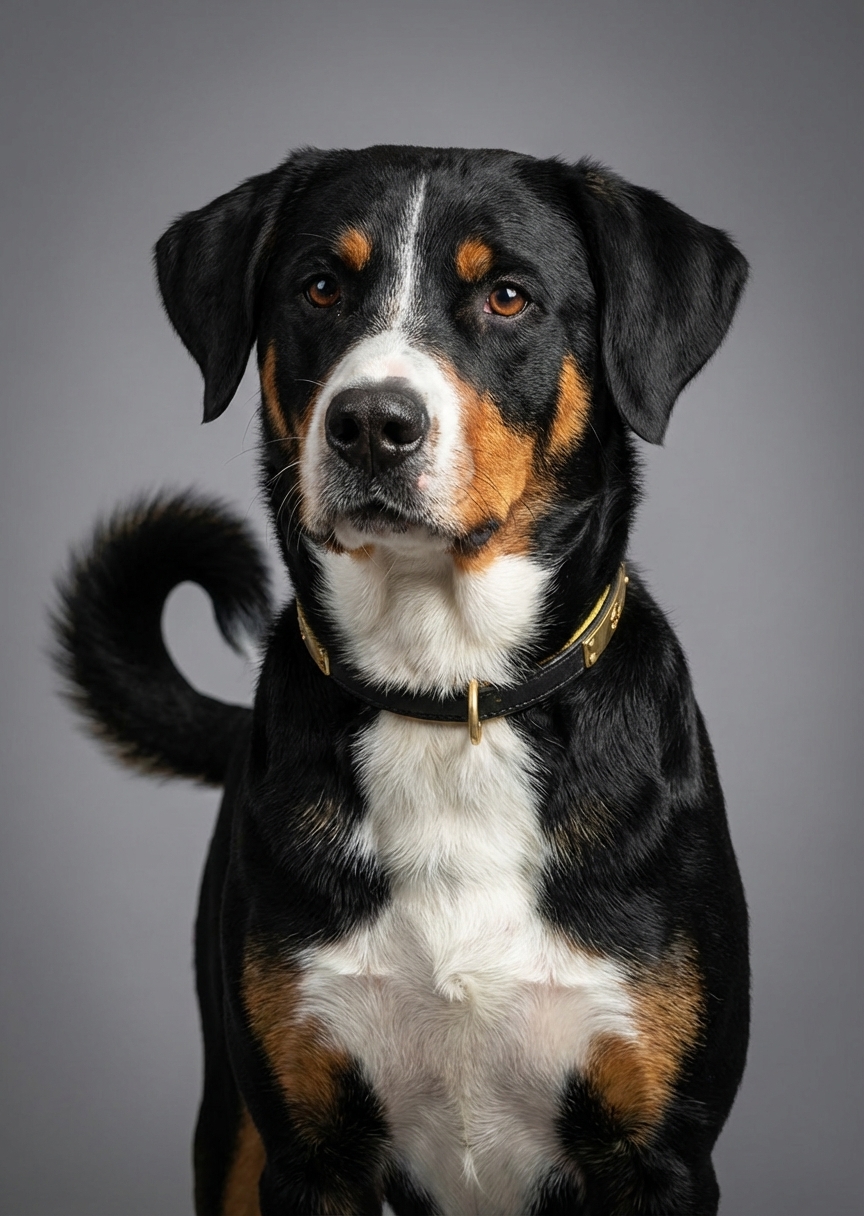
Key facts for researching Appenzeller Sennenhund
A breed profile is a useful starting point. It cannot tell you how each pet will act. Genes play a role, but so do health, early life, training, and the home. Age can also change a pet's needs. Use this dog profile to plan what to ask and check.
People often describe the Appenzeller Sennenhund as Energetic, intelligent, confident, loyal, alert. These words are broad clues, not firm facts. A bold pet may still need slow introductions. An active pet also needs calm time, good sleep, and play that fits its age.
Size and life span can vary between sources and groups. A pet's weight and health can change with age. Ask the right experts about food, movement, routine care, and known health risks. Keep notes so you can spot a change early.
Think about the whole life of the pet. Young pets often need more time for safe social skills and house rules. Adult pets need a steady care plan. Older pets may need shorter walks, softer rest areas, or more health checks.
Practical questions before choosing this breed
Start with your normal week. Count the hours that a pet may be alone. Plan time for meals, play, rest, grooming, and training. Be honest about the space, time, and funds you can give for many years.
- Can your home give the pet a safe place to sleep and a steady daily plan?
- How does this pet react to touch, guests, children, noise, travel, and other pets?
- Can you see clear health records, vaccine dates, ID details, and test results?
- Do local home rules, weather, travel needs, and long-term costs fit this pet?
- Who will help with care during work, trips, illness, or a change at home?
Meet the same pet more than once when you can. Watch how the pet acts in a calm place. Ask the breeder, rescue group, or foster home for clear examples. Ask what the pet enjoys, fears, and finds hard. Direct facts are more useful than a breed label.
Plan a simple first week before the pet comes home. Set up food, water, a quiet bed, safe gates, and a way to travel. Pick a vet and save the clinic number. Give the pet time to learn the new sounds, people, and daily plan.
Common mistakes in breed research
- Choosing by looks while missing the need for care, play, training, and close watch.
- Reading a list of traits as a promise about every pet of that breed.
- Forgetting the cost of food, grooming, vet care, travel, cover, and safe gear.
- Skipping a health check or taking vague health claims as proof.
- Expecting a new pet to settle at once instead of giving it time and a calm plan.
A good match depends on both the home and the pet. Needs can change with age, health, and life at home. Review the plan from time to time. If a problem starts, get kind and skilled help before it grows.
Do not use harsh tools or force to fix fear. They may hide warning signs and harm trust. Reward calm choices, keep each step small, and stop when the pet is upset. A qualified trainer can help with behavior. A vet can check for pain or illness.